
Simple Family Routines That Make Everyday Life Easier
Simple Family Routines That Make Everyday Life Easier
Image via Dreamstime.com
Family life can feel like a beautiful circus with no intermission. There are meals to make, clothes to wash, backpacks to pack, appointments to remember, and somehow everyone still needs time for connection, rest, and fun. When each day is handled one moment at a time, it is easy for small tasks to pile up until the whole house feels rushed and reactive.
That is where simple family routines can help. A good routine is not a rigid rulebook. It is more like a gentle track laid down through the day, making it easier for everyone to move in the same direction. Routines reduce decision fatigue, lower stress, and help both parents and children know what comes next. They also create small moments of predictability that can make home feel calmer and more secure.
The best part is that family routines do not need to be elaborate to work. In fact, the simpler they are, the more likely they are to stick. Small, repeatable habits can make everyday life run more smoothly without making your home feel overly structured. Whether you have toddlers, school-age kids, teens, or a mix of all three, a few steady rhythms can make a surprisingly big difference.
Why Simple Routines Matter
Families often imagine that making life easier requires a giant overhaul. In reality, what usually helps most is a handful of repeated actions that remove friction from daily life. When routine tasks happen at about the same time and in about the same order, there is less room for confusion, nagging, forgotten items, and last-minute scrambling.
Children also tend to thrive when they know what to expect. Predictability helps them feel more secure and gives them more confidence in handling daily responsibilities. Adults benefit too. A routine cuts down on mental clutter and reduces the exhausting cycle of deciding the same things over and over again.
Instead of asking every morning what everyone will wear, what they will eat, whether homework is packed, and who is driving whom where, a routine answers many of those questions automatically. It turns repeated chaos into a sequence that feels familiar and manageable.
Start With the Morning
Morning is often where the day either glides or stumbles. A peaceful morning routine does not require waking up at dawn and doing yoga in matching linen outfits. It just means making the first part of the day more predictable.
One of the easiest ways to improve mornings is to do more the night before. Backpacks can be packed, lunches can be prepped, clothes can be chosen, and shoes can be set by the door. Even five or ten minutes of evening preparation can save a surprising amount of stress when everyone is trying to get out the door.
In the morning itself, it helps to keep the sequence simple and consistent. Wake up, get dressed, eat breakfast, brush teeth, gather essentials, leave. Younger children especially respond well when the routine stays in the same order each day. A visual checklist on the fridge or bedroom wall can help them move through tasks with less prompting.
Breakfast also becomes easier when it is not reinvented every day. That does not mean eating the exact same thing forever, but rotating a few easy go-to meals can save time and mental energy. Oatmeal, yogurt, eggs, toast, fruit, smoothies, or simple grab-and-go options can keep mornings moving without a lot of decision-making.
Create an After-School Reset
The hours after school can be surprisingly tricky. Kids come home hungry, tired, overstimulated, and carrying the emotional weather of their day. Adults may also be shifting from work mode into home mode while trying to handle chores, dinner, and homework.
A short after-school routine can help everyone reset. This does not need to be complicated. In many homes, it might look like this: put shoes and backpacks in their places, wash hands, have a snack, take a short break, then start homework or quiet time.
This transition matters because it helps prevent the home from immediately dissolving into piles, hunger-fueled crankiness, and lost papers. A designated drop zone for school items is especially helpful. When backpacks, lunchboxes, jackets, and shoes always go to the same place, mornings become easier too.
This is also a good time for a daily check-in. It can be brief and natural. Ask one or two simple questions at snack time or during the ride home. What was the best part of your day? Was anything tricky today? These little conversations create a rhythm of connection without making kids feel interrogated.
Use Mealtime as an Anchor
Families are often busiest around meals, which is exactly why meals work so well as anchors for routine. Breakfast, dinner, or even a regular evening snack can become steady points in the day around which other habits form.
Dinner does not need to be elaborate to be meaningful. A simple meal shared at the table, even a few nights a week, can create a sense of togetherness and stability. It helps to have a loose meal plan for the week rather than figuring out dinner at 5:30 every day with the refrigerator door open and a blank expression.
Some families find it helpful to assign themes to certain nights. Pasta night, taco night, soup night, leftovers night. These gentle patterns reduce planning stress and make grocery shopping easier. They also keep dinner from becoming a nightly creativity contest.
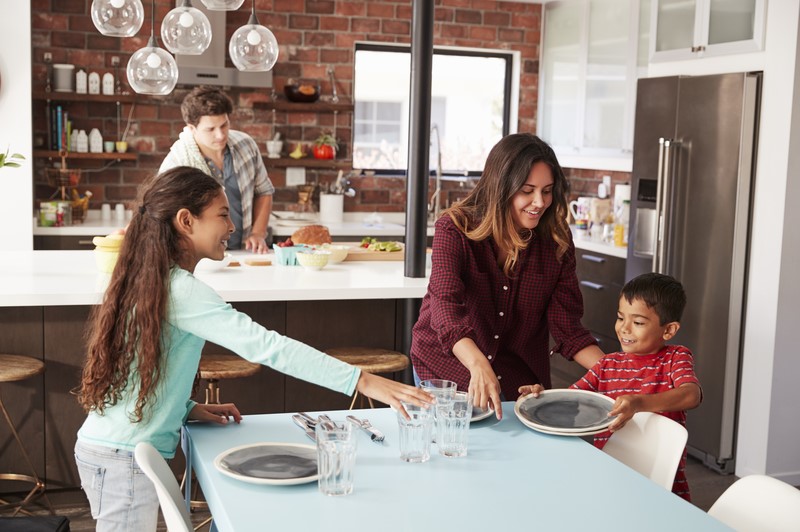
Mealtime routines can also include small responsibilities for children. One child sets the table, another fills water glasses, another clears dishes. These jobs do not just lighten the load. They make children feel like contributing members of the household.
Even if your family schedule is busy, a shared meal routine can still exist. It may not happen at the exact same time every day, but a regular pattern of gathering for food and conversation can still bring order and warmth to the week.
Keep Bedtime Predictable
If mornings are the launch pad, bedtime is the landing strip. A chaotic bedtime can ripple into the next day, leaving everyone tired, irritable, and running on fumes. A calm, predictable evening routine helps children settle more easily and gives adults a clearer end point to the day.
A simple bedtime routine might include picking up toys or clutter, putting on pajamas, brushing teeth, reading, talking quietly, and lights out. The exact routine can vary by age, but the order matters more than the details. Repetition signals that the day is winding down.
For older kids, bedtime routines may include showering, plugging in devices outside the bedroom, packing for the next day, and reading or quiet time before sleep. Teenagers may not want a story and a lullaby, but they still benefit from consistency.
One powerful trick is to start the bedtime process earlier than you think you need to. Many family bedtime battles happen because everyone begins too late and then rushes through the routine with rising stress. Starting fifteen minutes earlier can change the whole mood.
Bedtime is also a chance for connection. Reading together, talking about highs and lows, or sharing one thing everyone is grateful for can turn bedtime from a battle into a softer closing chapter for the day.
Make Chores Part of Daily Rhythm
Chores feel overwhelming when they live as giant floating clouds over the household. They feel more manageable when they become regular, smaller parts of daily life. Instead of saving everything for a dreaded weekend marathon, it often helps to tie chores to existing routines.
For example, a five- or ten-minute evening tidy-up can keep clutter from multiplying like rabbits in the dark. Everyone can put away shoes, fold blankets, clear counters, and return stray items to their homes. Set a timer and keep it light. A short daily reset is often easier than waiting until the house reaches full avalanche mode.
Laundry also becomes easier when it follows a pattern. Some families assign laundry to certain days. Others do one load a day. The method matters less than the predictability. When chores happen regularly, they stop feeling like emergency events.
Children can help more than adults sometimes expect, especially when tasks are age-appropriate and clearly taught. Younger children can put toys in bins, match socks, or wipe tables. Older kids can unload the dishwasher, sweep, fold laundry, or help prep meals. Routines make these tasks feel less like random punishments and more like normal parts of family life.
Build Tiny Connection Rituals
Not every useful routine has to be about productivity. Some of the most valuable family routines are the small, repeated moments of connection that help everyone feel seen and loved.
This could be a two-minute cuddle with a young child every morning, a silly handshake before school, Friday movie night, Saturday pancakes, or a walk after dinner. These rituals do not have to cost money or require elaborate planning. Their magic comes from repetition.
When life is busy, connection can easily become something families assume will happen on its own. But often it needs a little structure too. A tiny ritual creates a reliable pocket of closeness in an otherwise full day.
These moments also become memory makers. Years later, children may not remember every schedule detail, but they often remember hot chocolate on rainy nights, bedtime stories, Sunday muffins, or dancing in the kitchen while dinner cooked.
Avoid Overcomplicating It
The biggest mistake families make with routines is trying to create too many at once. A color-coded masterpiece of hourly perfection may look great on paper, but if it is too complicated, it will collapse by Wednesday.
Start small. Pick one pressure point in your day and build one routine around it. Maybe that is mornings. Maybe it is bedtime. Maybe it is the after-school mess tornado. Once one routine feels natural, add another.
It also helps to leave room for real life. A routine should serve your family, not boss everyone around like an overcaffeinated hall monitor. There will be sick days, late practices, rough moods, surprise errands, and seasons when the old routine needs adjusting. That is normal.
The goal is not perfection. The goal is to make ordinary life a little easier and a little kinder.
How to Make Routines Stick
Consistency matters, but so does buy-in. Families are more likely to follow routines when everyone understands the purpose behind them. Instead of announcing a pile of new rules, talk about what would help the day feel better. Ask children what part of the day feels hardest. Ask what would make mornings less rushed or bedtime less stressful.
Visual reminders can help, especially for younger children. A chart, checklist, or simple written routine can reduce the need for constant verbal reminders. It also helps routines feel more neutral. The chart becomes the cue, not a parent repeating the same instruction for the ninth time.
Another helpful idea is to celebrate progress instead of focusing only on what is not working. Notice when the routine helped. Notice when everyone got out the door with less stress or when bedtime felt smoother. Those small wins encourage the family to keep going.
The Quiet Power of Everyday Order
There is something deeply comforting about a home that has rhythm. Not because it is spotless or perfectly organized, but because the day has a shape people can trust. Morning begins with familiar steps. Afternoon has a landing place. Evening winds down with care. Small routines create the kind of invisible support that holds family life together.
When routines are simple, they do not feel heavy. They feel helpful. They take ordinary tasks and make them gentler. They reduce stress without demanding perfection. They create space for less scrambling and more living.
In the end, family routines are not really about schedules. They are about making home life feel steadier, warmer, and easier to carry. And often, it is the smallest repeated things that do the heaviest lifting.
A packed backpack by the door. A snack after school. A quick tidy before bed. Pancakes on Saturday. Story time under soft blankets. These are modest things, but they build a life. Brick by brick, day by day, they turn the daily tumble of family living into something more manageable and more meaningful.
*This is a collaborative post